One of the largest chain production facilities in Ukraine
Quality certified raw materials
Products are always available in stock
Clear adherence to agreements
PRODUCTION
SALE
DELIVERY
Regardless of the scale, any construction site very quickly “absorbs” nails.
Such a great demand appeared due to the fact that this fastening material is very difficult to replace, especially in those cases where assembly work needs to be carried out.
Most often with the help of nails it is necessary to connect wooden structures, but for a long time nails have invented a lot of new uses. For example, now they are used for roofing work (for fixing slate, roofing felt), for installing plasterboard and so on.
Nails cannot be replaced if you have to create a non-separable connection. In other words, if it is necessary to create unbreakable assemblies. In this case, the construction must have a high mechanical strength, and with the help of construction nails, this strength is guaranteed one hundred percent.
To ensure that assembly operations are successful and that the steel does not rust over time, a galvanized coating is used. However, practice shows that galvanized nails should only be used in exceptional cases.
Traditional are steel nails without protective coating, because they guarantee the same result for much less money. Please note: the service life is almost the same in both the first and second cases.
When choosing nails, the main factor is their price. As a rule, the final cost depends on the technical characteristics of the products, as well as on the size of the ordered batch. In the latter case, the buyer can take advantage of discounts if the ordered batch is large enough.
When choosing nails, we recommend that you pay attention to the condition of the flats, make sure that there is no rust on the surface, and the nails themselves are even.
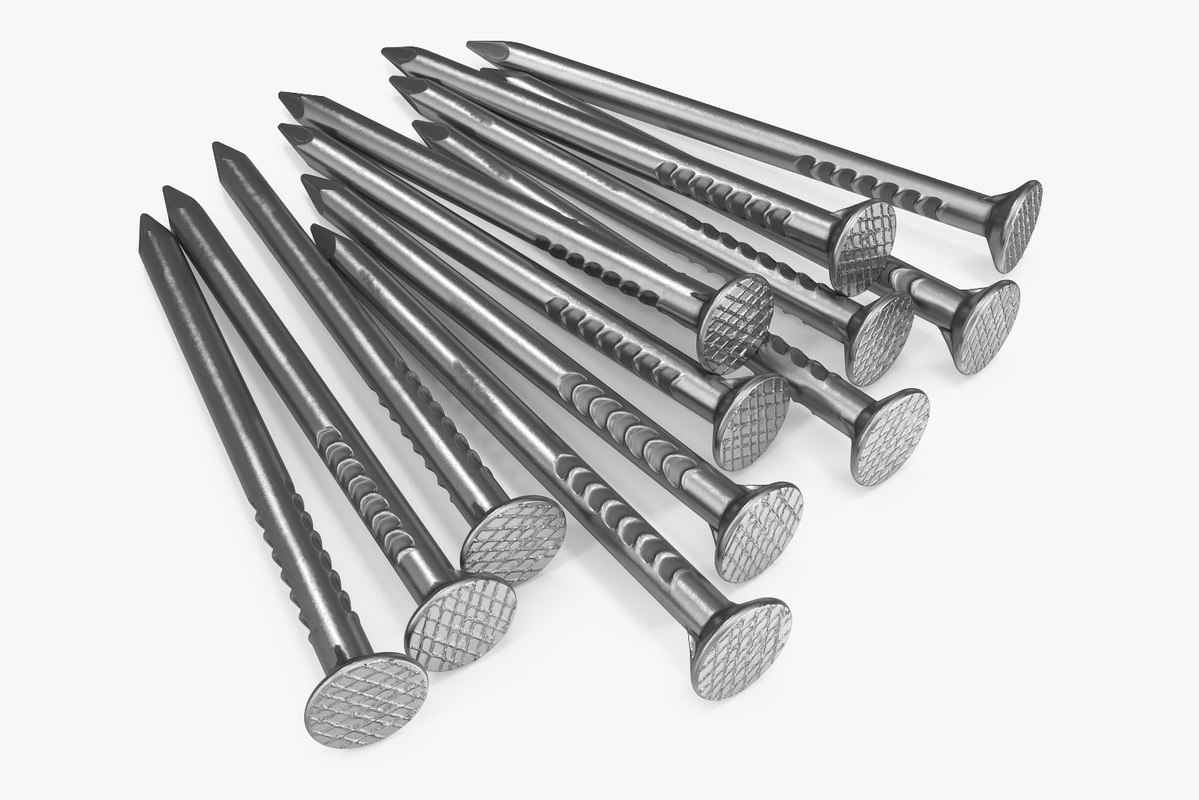
Wire nails, which are universal fasteners, are very widely used in construction, repair and prevention, roofing and other works related to the bonding of different materials, mainly wood.
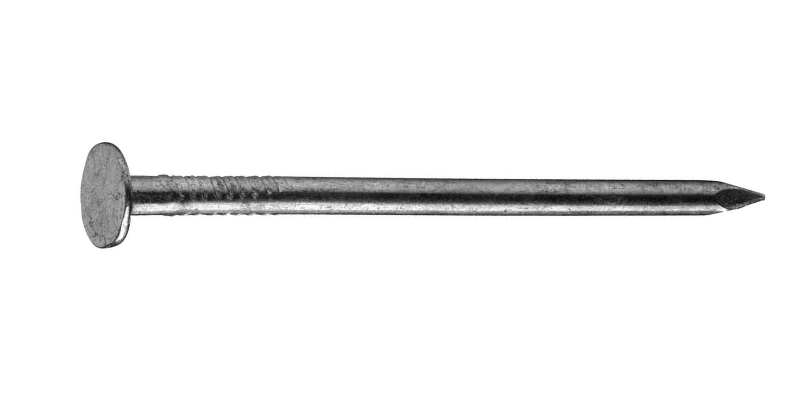
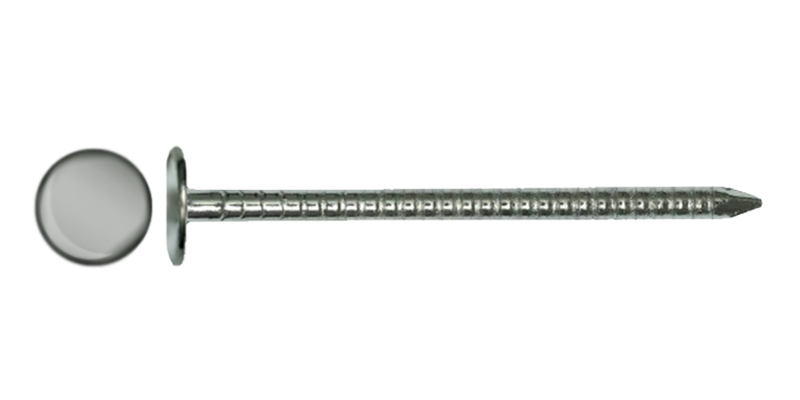
Produced wire nails have a round cross-section with a flat, conical or barrel-shaped head and, depending on the shape of the head and type of nails, grooved or smooth end surface of the head.